You have a slate roof on your heritage property and are considering an extension. What roofing material is best for the new section of your home?
Through our extensive experience in Sydney’s heritage suburbs, we've found that a significant 90% of homeowners opt for slate roofing — primarily reclaimed slate, with some choosing new slate materials. This preference is based on practical factors rather than mere nostalgia. Slate roofing complies with council regulations for visible additions, preserves the overall value of your property, and aesthetically integrates with the existing slate roof.
While a small number of projects may use Colorbond — especially for rear extensions not visible from the street, where council regulations are more lenient and budget constraints are a concern — this is an exception rather than the standard practice.
Discover the reasons why slate consistently surpasses other roofing materials and how to make informed decisions for your home extension.
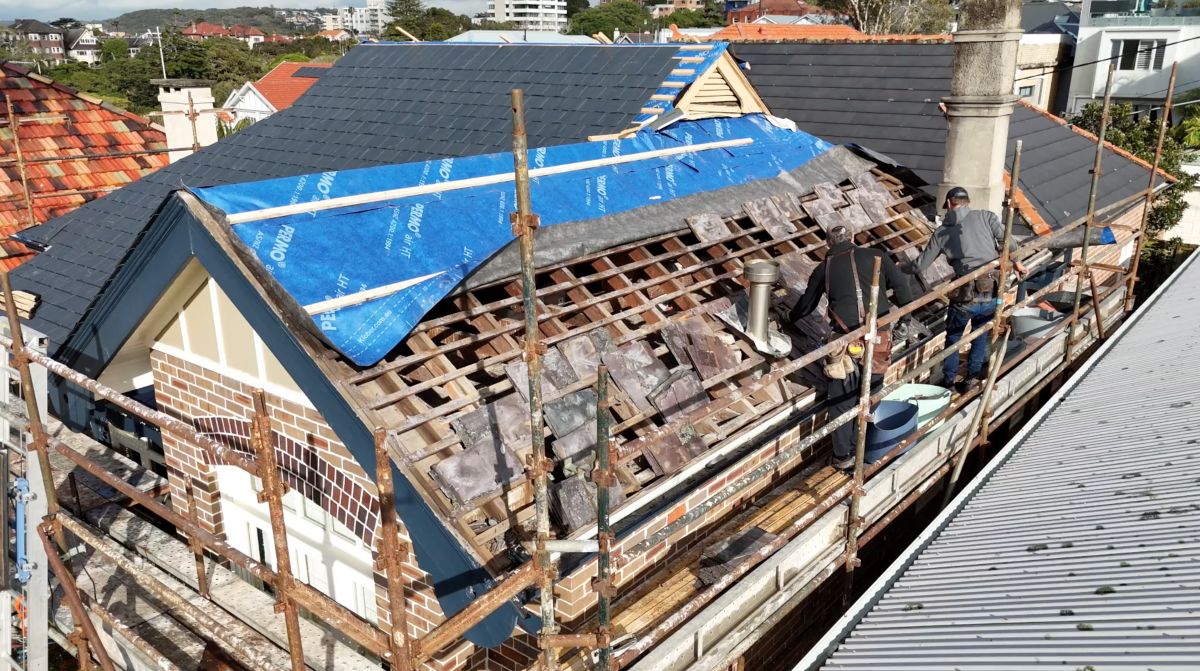
Explore Why Slate is the Top Choice for Heritage Home Extensions
Here are three strong reasons why slate is the preferred material, ranked by importance:
- Councils show a strong preference for slate roofing. Heritage Conservation Areas throughout Sydney’s Inner West, North Shore, Eastern Suburbs, and Hunters Hill enforce Development Control Plans that require the use of like-for-like materials for any visible additions. Slate is a perfect match for existing slate, while Colorbond does not satisfy this requirement.
- Slate roofing safeguards your property’s value. Homes with slate roofs maintain their value partly due to the slate itself. Adding Colorbond to a visible extension is viewed as a downgrade, which potential buyers will consider when evaluating the property's value.
- Slate has a visually appealing aesthetic. It provides texture, depth, and a natural irregularity inherent in its stone composition. In contrast, Colorbond has a flat, metallic appearance. Even the best color match cannot conceal the structural differences between these materials.
Most homeowners carefully consider these three reasons and arrive at the conclusion that slate is the better choice long before budgetary concerns come into play.
Why Opt for Reclaimed Slate in Your Home Extension?
Reclaimed slate — sourced from old tiles salvaged from demolished or re-roofed properties — is often the preferred option among homeowners, and it is the first recommendation from seasoned slate roofers.
Here’s what you can typically expect when choosing reclaimed slate:
- A color and texture match that closely resembles your existing roof — often indistinguishable from the original
- Demonstrated durability — having lasted over 80 years on another roof in Sydney, its quality is reliable
- Increased credibility with heritage consultants and local councils, enhancing the likelihood of project approval
- An environmentally responsible choice — repurposing existing materials instead of extracting new stone
However, there’s a caveat:
Reclaimed slate may not always be readily available in the exact size and quantity needed. A reputable supplier generally keeps common Sydney profiles in stock, but if your extension requires a specific size in large quantities, sourcing the appropriate batch can take several weeks. Your roofer must meticulously sort and grade each tile, discarding those with chips, hairline cracks, or misaligned nail holes.
Cost: Expect to pay around $300 per square metre for installation when supply is adequate. If you need a specific profile and availability is limited, be prepared for increased costs.
Exploring New Slate: The Alternative When Reclaimed Slate is Unavailable
If reclaimed slate doesn't align with your project timeline, new slate is the next viable option. The main sources you’ll encounter are Welsh, Spanish, and Chinese slate.
- Welsh slate is the traditional material — the type most original Sydney heritage roofs were built with in the 1800s. It has a long-standing reputation for durability and consistent quality.
- Spanish slate is a dependable mid-range alternative and currently dominates the imported slate market in Australia.
- Chinese slate can vary significantly in quality. Some quarries yield excellent material, while others produce slate that may delaminate within a few short years. Distinguishing between the two without industry knowledge can be difficult.
Here’s what to expect when choosing new slate:
- Uniform thickness and sizing across each tile, providing a consistent appearance
- Reliable supply if your builder adheres to a strict schedule, which prevents project delays
- A roof that can endure for 80 to over 100 years when installed correctly, delivering long-term value
However, there’s a caveat:
New slate will not immediately match your existing roof. It requires time to weather appropriately — typically between 5 to 15 years before it begins to blend seamlessly with older slate. In contrast, reclaimed slate provides an immediate solution.
Cost: Installation for new Welsh slate starts at approximately $350 per square metre. Spanish slate is slightly less expensive, while Chinese slate is the most budget-friendly option, albeit with a higher risk of quality issues as the price decreases.
Understanding Colorbond: When is it Acceptable to Use?
Colorbond may be considered under specific conditions: for a rear extension that is hidden from the street, on a property where council approval is unlikely to face opposition, and where the homeowner wishes to allocate budget elsewhere.
This scenario applies to a very small percentage of heritage projects. For most homeowners, Colorbond does not make the list — councils often reject such proposals, the visual mismatch is noticeable from nearly every angle, and the long-term value of the property could be significantly affected.
<pIf your extension meets the strict criteria where Colorbond is acceptable — only for rear sections not visible from any public vantage point, and with council approval — it can result in material cost savings. Pricing starts around $120 per square metre for installation, compared to $300 or more for slate.
It is essential to verify with your council and roofer before relying on those savings. We've seen homeowners successfully obtain a Colorbond design through Development Application (DA) submission, only to learn during construction that any visible sections must revert to slate — negating the expected savings.
Is Combining Roofing Materials for Your Extension a Viable Option?
Mixed roofing configurations are not uncommon — featuring slate on the original structure and an alternative material for a rear addition. They can look quite acceptable when executed properly, but can appear unattractive when poorly designed.
The critical aspect is the junction:
- Step flashings, apron flashings, and lead work that create a clean, watertight connection between materials
- A roofline design that allows the new section to tuck under or align neatly below the original ridge
- Avoiding transitions in materials at the same height on the roofline — these can be particularly challenging to execute successfully
An experienced slate roofer will inform you upfront whether the design supports a mixed roofing approach or if it would be more beneficial to maintain slate consistency throughout your extension.
Essential Insights on Heritage and Council Regulations
If your home is heritage-listed or located within a Heritage Conservation Area (HCA), consulting with the council before making any commitments is crucial. This is particularly important in Sydney’s Inner West, North Shore, Eastern Suburbs, and Hunters Hill — regions known for their abundance of Federation and Victorian-era homes.
Each local council has a Development Control Plan that outlines specific provisions governing roofing materials for heritage properties. Most councils mandate the use of like-for-like materials for visible additions — which usually leads you to select slate, whether it be new or reclaimed.
Confirming these regulations early in the process is vital, prior to investing in architectural drawings. Many homeowners have reached the DA submission stage with a Colorbond design, only to discover that councils require slate for visible sections.
Frequently Asked Questions: Your Concerns About Slate Roofing Addressed
What makes slate a more popular choice than Colorbond for roofing?
Several factors contribute to this trend. The primary reason is council regulations — visible additions to heritage homes almost always need to match the original material, and slate is perfectly compatible with slate. property value plays a significant role: a slate roof is a key component of what a buyer values, and incorporating Colorbond into the visible roofline is perceived as a compromise. the visual distinctions between slate and Colorbond are significant, regardless of meticulous color matching. Most homeowners examine these three factors and ultimately choose slate for their extensions.
Is reclaimed slate as reliable as new slate for roofing purposes?
For a heritage extension, reclaimed slate frequently emerges as the superior option. Reclaimed slate that has already endured 80 to 100 years on a Sydney roof has proven its durability and matches your existing roof in both color and texture in a way that new slate cannot replicate until many years have passed. The only downside is availability — it is not always possible to find the precise quantity and size you need on short notice. An experienced slate roofer will be knowledgeable about what is currently in stock and what will arrive soon, ensuring your project proceeds without issue.
What should I do if reclaimed slate is unavailable for my extension project?
If that happens, new slate becomes the alternative. Welsh slate is the gold-standard substitute — sourced from the same origins as much of Sydney’s original heritage roofing. Although it may not match your existing roof right away, it will weather over a period of 5 to 15 years and significantly outlast most other roofing materials, providing peace of mind for homeowners.
Is it permissible to use Colorbond on a heritage-listed home?
For the primary roof or any areas visible from the street — almost certainly not. For a strictly rear extension that is not visible from any public area, some councils may permit it, provided the color is sympathetic to the heritage aesthetic. Always consult with your council and heritage consultant before moving forward, as if the council declines your application at the DA stage, you will need to revise the entire design, leading to delays and increased costs.
How can I find out if my home is located in a Heritage Conservation Area?
Most Sydney councils provide online heritage maps where you can search your address. Alternatively, you can reach out directly to the council’s planning department for information over the phone. It’s advisable to do this before investing in architectural drawings to avoid costly mistakes.
Do I need a specialist slate roofer, or can any roofer handle the installation?
It is essential to hire a roofer who specializes in slate. The installation of slate requires a specific skill set that differs significantly from metal roofing or tiling — tiles must be sorted by thickness, assessed individually, and hand-punched for nail holes. The flashing details where a new slate section connects with an existing one require proper lead work, which most general roofers are not accustomed to managing. If not executed correctly, you risk leaks, cracked tiles, and a roof that appears unprofessional next to your meticulously maintained original roof. Always request to see examples of slate-specific projects instead of general roofing work to ensure quality installation.
Looking for Expert Guidance on Your Heritage Extension Roof? Reach Out to Us Today!
If you’re planning an extension on your heritage property in Sydney and need help selecting the right roofing material for your addition, get in touch with Slate.
We specialize in both new and reclaimed slate in Sydney’s heritage suburbs on a regular basis. We will assess your current roofing, confirm what the council will approve, and provide you with clear information regarding availability, costs, and timelines for your project.
Contact Slate at 0431 593 625 or visit us at https://slateroofrestorations.com.au/Home to discuss your roofing needs.
Original Article First Published At: Extending Your Heritage Slate Roof? Here’s What 90% of Homeowners Actually Do
The Article: Heritage Slate Roof Extensions: What Most Homeowners Choose first appeared on https://writebuff.com
The Article Heritage Slate Roof Extensions: Popular Choices for Homeowners Was Found On https://limitsofstrategy.com