
For many years now, people who know just enough about local SEO to be dangerous have blasted out “city” or “location” pages like they’re the Funyuns factory. Sometimes those pages are effective, and produce both visibility and customers, but usually they flop.
Now, with AI on the scene, there’s even more incentive to create “city” pages for your site. They’re a great way for service-area businesses to rank in areas where they work but don’t have a physical location (or a gray-hat Google Business Profile page). The same is true of “state,” “province,” or “county” pages, or other pages that target a specific region. For multi-location bricks-and-mortar businesses, solid “location” pages – one for each physical location of the business – can serve the same function. For the sake of simplicity, I’ll just refer to all of them as “city” pages.
Anyway, one of many ways AI chatbots (ChatGPT, Claude, Gemini, etc.) have changed local search is that they’ve made it much easier for searchers to refine or tweak their queries until they find exactly the right local business. These queries have become extremely specific: “nearby dentists who see 1-year-old infants,” “local plumbers who only use copper press fittings,” “Honda dealerships near me that sell stickshifts,” etc. Much of the time, people want to see 1-2 businesses that meet all or most of their criteria, rather than sift through 10 blue links or a pile of Google Maps results and maybe or maybe not find the best-fit business.
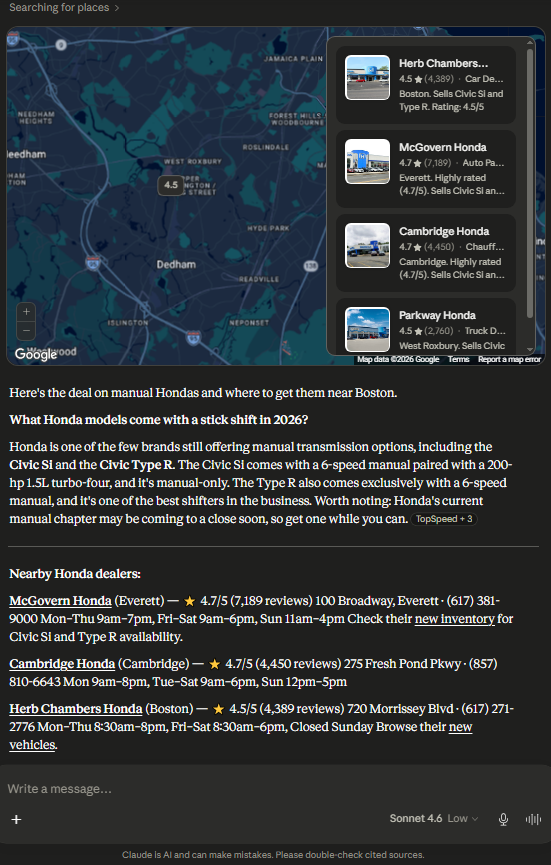
In other words, more and more people will look for businesses that (a) are in their town or serving their town, (b) offer such-and-such, and (c) meet at least one other criterion, which might be totally crazy or unpredictable. Thoughtful, well-crafted city pages can still help you attract those customers.
It’s long been the case that a good city page (1) ranks well in Google’s organic results, (2) draws clicks or helps pull you into the Google Maps results, and (3) compels people to become customers. But these days there are at least two more marks of a good city page: it also (4) shows up occasionally in some of the AI chatbots’ results, and (5) it isn’t AI slop. That last point is key: If your city pages are AI slop, they’re unlikely to rank well long-term (if and when Google and LLMs start dishing out penalties), and they’ll turn off would-be customers, because they offer the visitor nothing of value. Now it’s easier than ever to belch out terrible city pages. AI makes that supremely easy to do.
So, assuming you want to use AI to aid in this part of local SEO effort, how do you avoid making AI-slop city pages?
Ask your AI chatbot of choice (I like Claude Sonnet) to draft or customize each page to some or all of the following 10 specifications:
1. Find, include, and cite “local” statistics that are directly relevant to whatever it is you offer.
2. Cite and link to stories by local news stations that tie into your offerings.
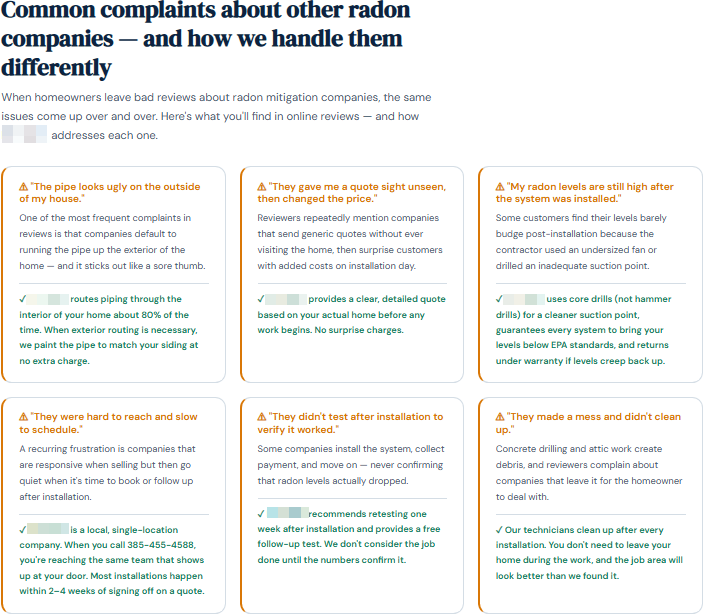
3. Identify and summarize common complaints based on competitors’ or other similar businesses’ reviews. Competitors don’t offer free quotes, aren’t open on weekends, aren’t specialists, average 2 years of experience in the field, tend to run late, etc.
4. Download your Google Search Console “performance” data, upload it to your AI chatbot of choice, and ask it to tailor the content to the specific search terms that have historically performed the best, or to what it considers “content gaps” on your site, or both.
5. Find and link to or incorporate existing content on your site that’s relevant to the place you’re targeting. Maybe you have a forgotten blog post from 2013, or an old attempt at a “city” page, or a “bio” page for someone who no longer works with you. Your AI helper can probably surface that content and maybe reuse it in a way that can help you now.
6. Find (on your site) reviews from customers who live in or near that city, and include those reviews in the draft. That’s a cakewalk if you’ve followed my longstanding recommendation of copying and pasting customers’ reviews onto relevant pages of your site, referencing each customer’s city, and linking to where that customer originally posted his or her review.
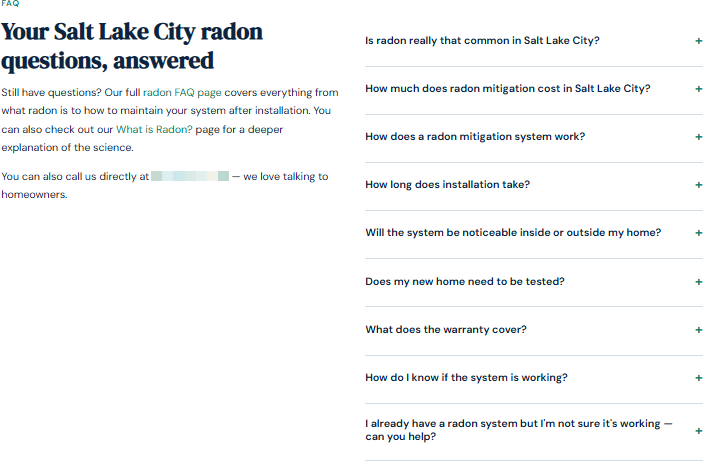
7. Ask and answer germane FAQs, particularly regarding what local competitors offer and how it compares to what you offer. Ask your AI chatbot to include points like competitors’ pricing ranges, typical business hours of competitors, how many competitors have such-and-such professional certifications or licensure, how many years of experience your average local competitor has, who else speaks such-and-such language. Basically, think of some of your selling points and ask the chatbot to determine whether and how many local competitors can claim the same.
8. Link to or embed relevant videos from your YouTube channel. This is an easy way to weave in some visual content. It may also be a simple way to scrounge some more views and possibly some channel subscribers, either or both of which can help expand the reach of your YouTube channel or specific videos.
9. Include internal links to your relevant subpages. Possibly also include a list of related or add-on services you offer. Can you do this without your AI chatbot? Of course. But it gets tedious, especially if you aim to create lots of “location” pages.
10. List nearby cities, towns, or neighborhoods in your service area or that customers tend to come from. Same comment as for point #9: you can do this manually, but why would you want to? Also, your AI buddy can more easily calculate which specific communities are in or near your service area.
How might you cram all of that into an AI prompt? Below is an example of a prompt I suggest you try, at least as a starting point. Of course, you’ll want to modify it to fit your situation (swap out the underlined parts), even if you’re not a professional sheep shearer.
Claude, please draft up a page for mysite.com geared toward potential customers from Anytown who want to hire a professional sheep shearer. Where possible, find, cite, and link to the following: (1) local statistics relevant to sheep shearing (e.g. demand, typical pricing, the number of local professionals who offer it, etc.), (2) relevant news stories from local news stations, (3) frequent complaints about other sheep shearers based on online reviews from their customers, and (4) FAQs and their answers.
Where possible, also include excerpts from any content on mysite.com that’s relevant to Anytown, include reviews on mysite.com written by customers who seem to be from Anytown, include links to subpages on mysite.com that seem relevant to potential sheep-shearing customers, and embed any YouTube videos from youtube.com/@MyBrand that pertain to sheep shearing.
Include a “Service Area” section of the page, in which you list all of the communities within 10 miles of Anytown that are NOT targeted with a landing page on mysite.com. Most of these will be nearby communities smaller than Anytown.
Attached is a spreadsheet of the Google Search Console “Performance” data on mysite.com. When in doubt as to which specific search terms to target, please refer to the specific search terms and/or pages on mysite.com that seem to have performed best so far. In cases where you see “content gaps” – like a search term for which mysite.com gets significant impressions but doesn’t target with a dedicated page – I’d like you to include a section on that topic in your draft of the Anytown page.
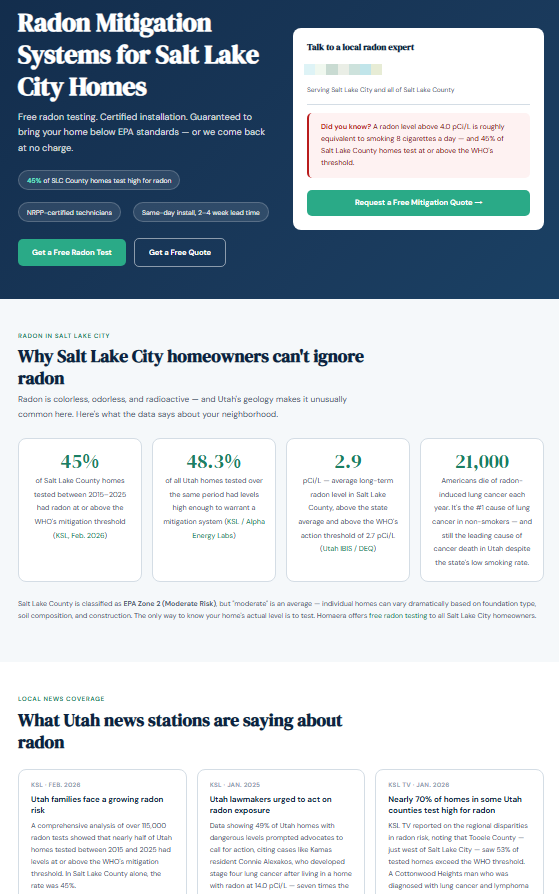
With the right specs (like the above), your go-to AI chatbot will produce a rock-solid city page that goes something like this:
Whatever your AI cat drags in, I suggest you check it over and spend at least a few minutes editing. The 1.0 version doesn’t need to be amazing, but it shouldn’t stink up the joint too much. It should sound generally like you.
By the way, you might want to replace most or all of the em dashes (“—”) with more-precise punctuation, or with whatever punctuation you tend to use. AI-generated content tends to contain a ton of em dashes. My tinfoil-hat theory is that those later will serve as telltale markers for Google and the LLMs to identify AI-produced content that was churned out without much or any quality-control. It’s probably just a matter of time before that can result in a penalty of one kind or another. That’s my hunch, anyway. Your AI chatbot spared you the heavy lifting, so if you’re serious you’ll put at least a little effort into the finishing touches. You need to stay sharp, too.
Which AI chatbot do you find most useful for your local SEO effort? To what extent have you used it – or eschewed it – for the “city” pages on your site? Any questions, concerns, or tips? Leave a comment!