Something big just shifted in how people find answers online.
More buyers are skipping the investigation and deliberation of clicking through blue links on Google, in favor of asking ChatGPT, Perplexity, and the like for one direct answer.

That changes everything for us marketers. The question is no longer just “Do we rank?” It’s “Do AI search tools even mention us?” This guide breaks down what AI search tools actually are, how buyers are using them today, and which tools belong in your stack as a marketer.
Table of Contents
- What is an AI search tool?
- How AI Search Tools Are Changing Buyer Research
- The Main Types of AI Search Tools
- Best AI Search Tools by Use Case
- How Marketers Should Evaluate an AI Search Tool
- Frequently Asked Questions About AI Search Tools
- Search no more, marketers.
What is an AI search tool?
An AI search tool or AI search software is any application that uses artificial intelligence to help users crawl, find, retrieve, or synthesize information. But that’s a broad net covering various tools for research, visibility, and optimization.
Here’s how to tell them apart at a glance:
- Research: Answer engines (like ChatGPT, Perplexity, and Gemini) read your question, pull from multiple sources, and return what they think is the best answer. Sources may or may not be cited.
- Visibility: AI site search tools live inside a company’s own website or product. They help visitors find relevant content, answers, or products without leaving the page. Think of the search bar on HubSpot’s website, for example.
- Optimization: AEO (answer engine optimization) tools are specifically for marketers. They track whether and how a brand appears in AI search engines and provide data to improve that visibility. Examples include HubSpot AEO and Semrush.
These three categories—research, visibility, and optimization—often get lumped together, but they shouldn’t be. Knowing which type of tool you’re dealing with helps you determine which tool actually fits your needs. We’ll dig into that more shortly.
How AI Search Tools Are Changing Buyer Research
Buyers have always done research before making a purchase. What’s changed is where and how far along they get before a vendor ever hears from them.
The numbers speak volumes. Forrester found that 94% of B2B buyers used AI during recent purchase processes. Of those, 55% used AI to compare vendors, 54% to research products, and 47% to build internal business cases, all before talking to a single sales rep.
AI answer engines now rank as the #1 source for vendor research, ahead of vendor websites, sales reps, and product experts.
On the other end, McKinsey research found that about 50% of consumers across all demographics (including boomers) use AI-powered search for purchasing decisions. In fact, Adobe Digital Insights reported that 56% of US consumers used generative AI during the 2025 holiday shopping season, up 45% from the year prior.
So, what does it all mean?
By the time a buyer fills out your demo request form or replies to outreach, they’ve likely already consulted an AI engine with many of their questions. According to Forrester, AI answer engines are now the #1 vendor research source, and the buying journey is largely complete before any vendor contact happens.
For marketers, the old playbook of “rank on Google, get traffic” is no longer enough. Visibility inside answer engines is becoming the primary discovery layer, especially for purchase-intent queries.
The Main Types of AI Search Tools
Before comparing specific products, it helps to understand the three main categories. Each serves a different person with a different goal.
1. Answer Engines
Answer engines are the ChatGPTs and Geminis of the world. Users ask them questions in plain language and get synthesized answers crafted by the tools, drawing from multiple sources.
Some cite their sources; some don’t. Some are real-time and web-connected; some rely on training data. Either way, the goal is to give the user a single response, not just use semantic search to deliver resources to filter through, as with a traditional search engine.
Buyers use answer engines for discovery, comparison, and follow-up research. At the same time, HubSpot’s AI Trends Report found 40% of marketers turn to them for research, data analysis, and content generation, among other things. (This also makes them the most popular AI tool among marketers.)
Marketers can’t control what answer engines say about them to consumers, but they can influence it through answer engine optimization or sharing credible, well-sourced content that answer engines cite.
2. AI Site Search Tools
Ever landed on a clothing website looking for something specific? The search bar at the top of that site is an example of an AI site search tool.
AI site search tools are embedded into a company’s website, app, or internal knowledge base. They help users find relevant pages, products, or answers without leaving the page. Platforms like Algolia, Coveo, and Elasticsearch fall in this bucket.
AI site search tools matter most for SaaS companies, e-commerce brands, and enterprises with large content libraries. If visitors can’t find what they’re looking for on your site, they’ll ask an answer engine instead.
3. AEO (Answer Engine Optimization) Tools
AEO tools are marketer-facing platforms and arguably the fastest-growing of the three AI search tool categories. They track how often your brand appears in AI-generated answers, compare your visibility against competitors, and give you recommendations to close the gap.
For more details, see our guide to the best AI search analytics tools for marketing teams.
According to Bain & Company, 60% of searches now end without a click, and AI search is a major contributor to that trend. The brands that show up in AI-generated answers are the ones buyers actually see.
Best AI Search Tools by Use Case
When selecting an AI search tool, the best choice is one that fits the specific job you’re trying to do, not just the one that’s most popular or has the most features.
Let’s break down the best AI search tools with the common marketing use cases in mind.
Note: AI is a market that is still evolving, and many of these tools have shortcomings and controversies. Evaluate them closely before using and remember to use them as strategic tools, not replacements for human creativity and discretion.
Best for Measuring Brand Visibility in Answer Engines: HubSpot AEO
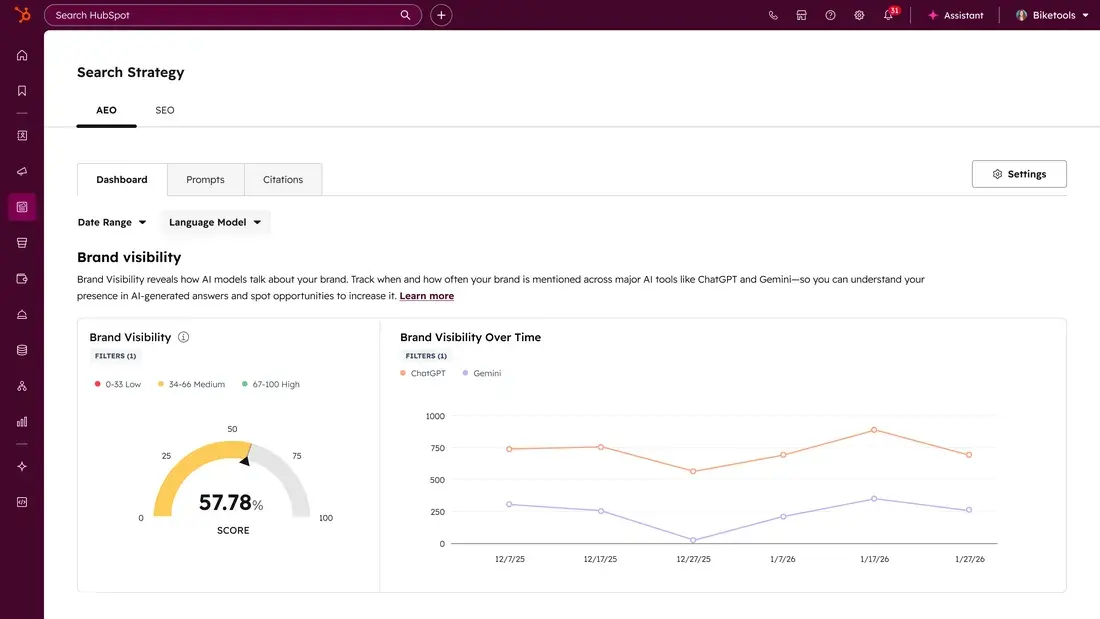
Unlike most AI search tools you hear about today, this one’s just for us marketers. We marketers need to know whether our brand is showing up in the tools consumers use to search.
HubSpot AEO is built specifically for this job, tracking brand visibility across ChatGPT, Perplexity, and Gemini, while also monitoring emerging AI search tools like Google’s AI search features.
HubSpot AEO is differentiated from standalone AEO tools like RankPrompt by using data from your CRM to predict the prompts your actual buyers are most likely to type. Instead of starting from generic industry guesses, it grounds recommendations in what HubSpot already knows about your specific customers and business.
Customers using the AEO beta and prioritizing answer engines saw AI referral traffic grow 20%, even as overall organic traffic fell 27% year-over-year.
Best for: HubSpot customers; Marketers who want ongoing visibility tracking, competitor benchmarking, citation analysis, and actionable recommendations across the major answer engines.
Pricing: Available with Marketing Hub Pro and Enterprise, or as a standalone at $50/month.
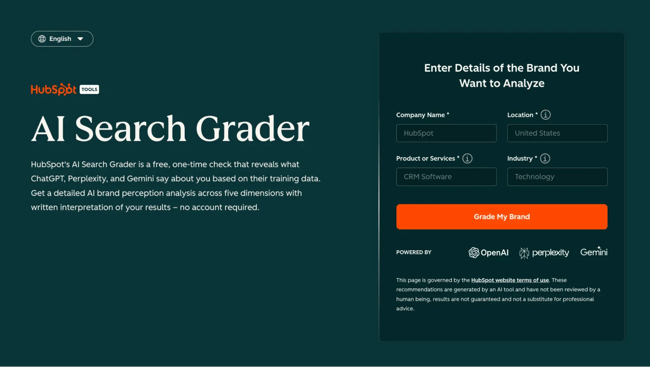
Not sure where to start? HubSpot’s AI Search Grader offers a free, one-time diagnostic snapshot of how your brand appears in AI search results. It’s a lightweight first step before committing to ongoing tracking.
Best for Everyday Research: ChatGPT
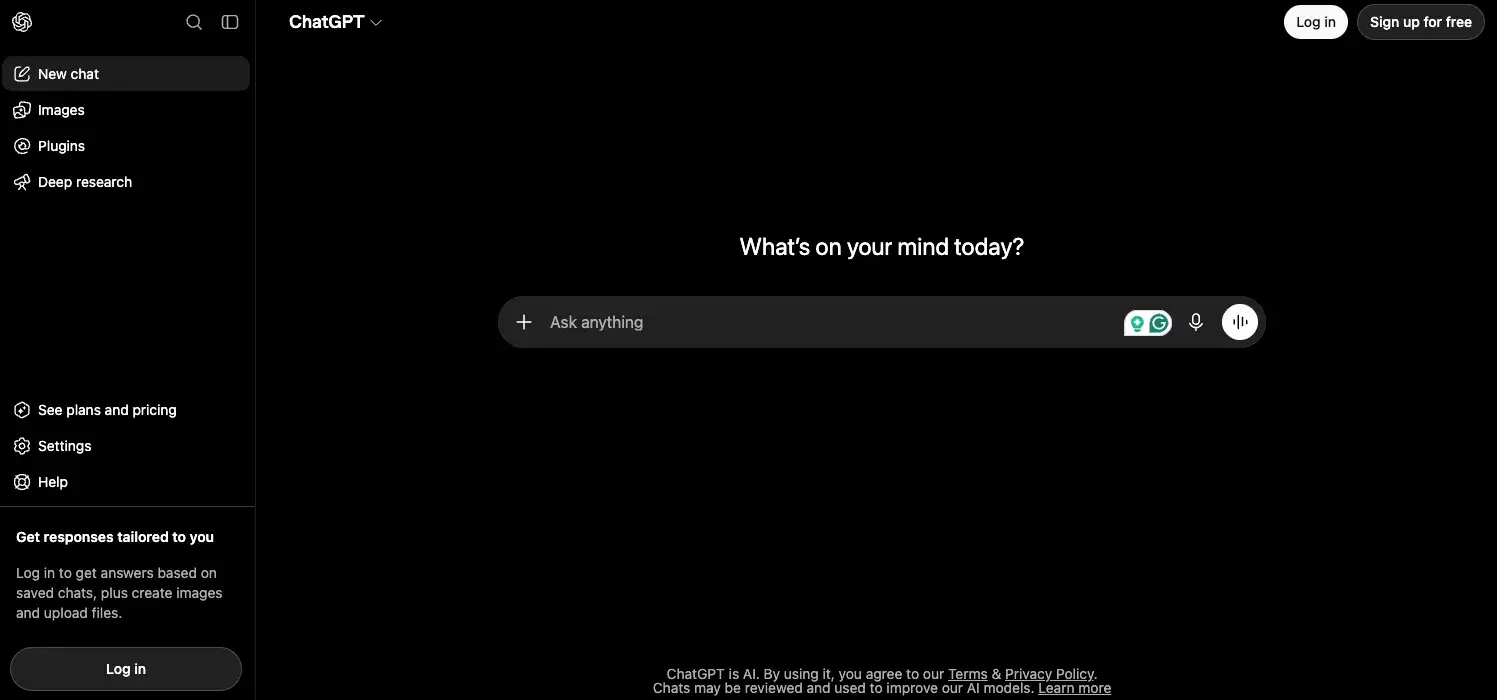
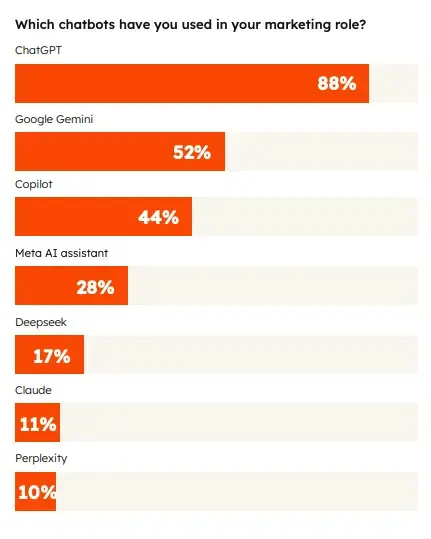
If you need a research partner for everyday questions, competitive intel, content brainstorming, or quick synthesis, ChatGPT is the most widely recognized and used option by a wide margin. In fact, our research found that even 88% of marketers have used it in their roles, beating Gemini, which ranked second, by a whopping 33%.
ChatGPT processes more than 2.5 billion prompts per day, according to OpenAI data. It handles everything from creative writing and market research to coding and multi-step analysis.
Research from Bain & Company found that 68% of LLM users rely on these platforms to research, gather, and summarize information, and 42% use them for shopping recommendations.
Best for: Marketers, writers, and researchers who want a versatile AI assistant for open-ended research, drafting, and synthesis.
Pricing: Free tier available. ChatGPT Plus at $20/month.
Pro tip: HubSpot has a deep research connector with ChatGPT, which lets you bring your CRM customer data into the tool and act on those insights.
Best for Cited Answers: Perplexity
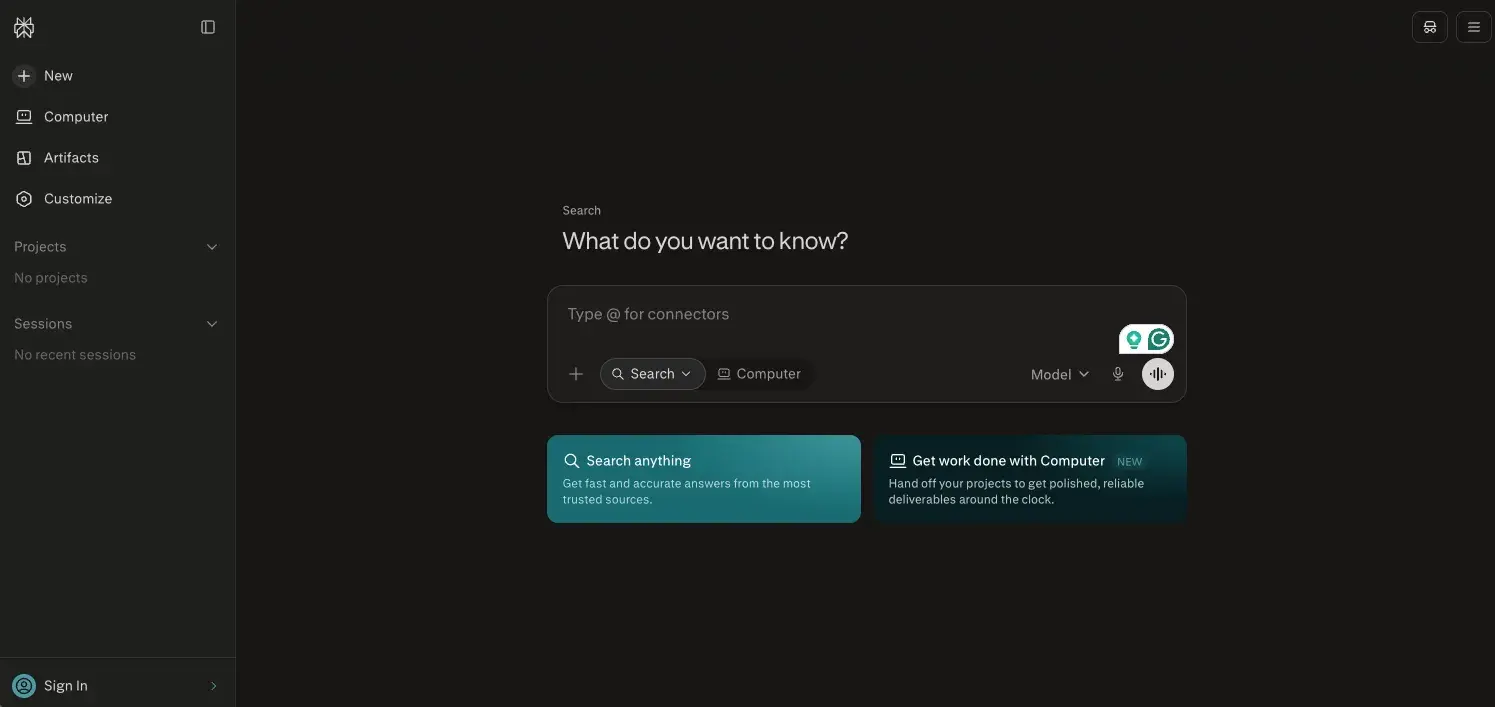
At Bloomberg’s Tech Summit, CEO Aravind Srinivas revealed Perplexity processed 780 million queries in May 2025 alone, with over 20% month-over-month growth. It’s particularly popular with B2B buyers doing deep vendor evaluations, and it’s easy to see why.
On the surface, Perplexity looks very similar to ChatGPT, but it was built from the ground up around real-time, sourced answers. Unlike ChatGPT, every Perplexity response comes with inline citations. Sources are a first-class part of the interface, not an afterthought, which is essential for credibility.
According to the Columbia Journalism Review, which tested eight AI search tools on citation accuracy, Perplexity had the lowest error rate at 37%. That’s not perfect, but it makes Perplexity the most reliable option at the moment.
Best for: Any task where accuracy and sourcing are paramount — Fact-checking, competitive research, academic or technical topics.
Pricing: Free tier available. Perplexity Pro at $20/month.
Best for Internal or Site Search: Algolia or Coveo
If the problem is that visitors can’t find what they need on your website or that employees can’t sort through your internal documentation, you may need an AI site search tool, not an answer engine.
Algolia is the go-to for speed and developer flexibility. It powers search for websites and applications with strong e-commerce and SaaS use cases.
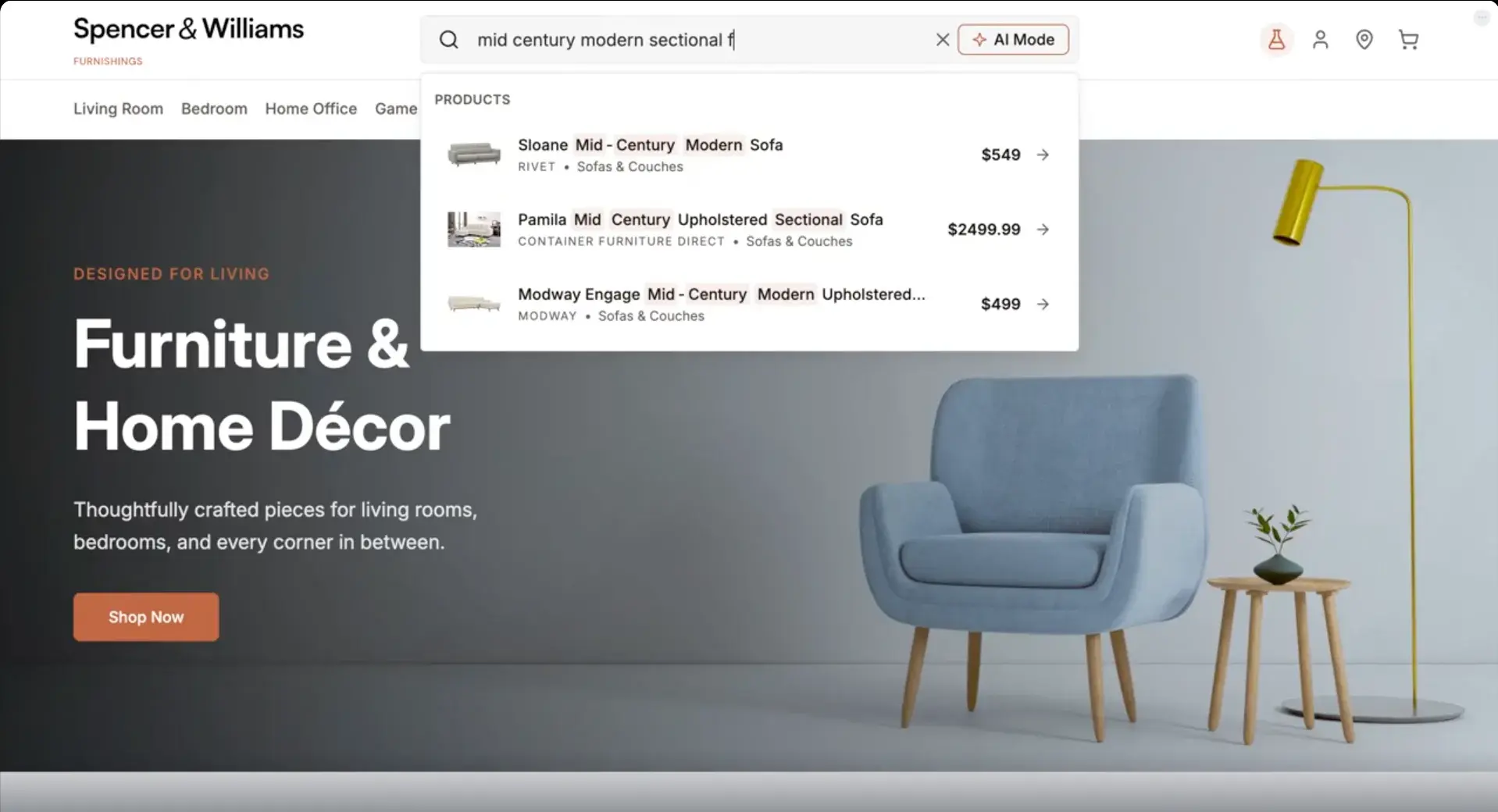
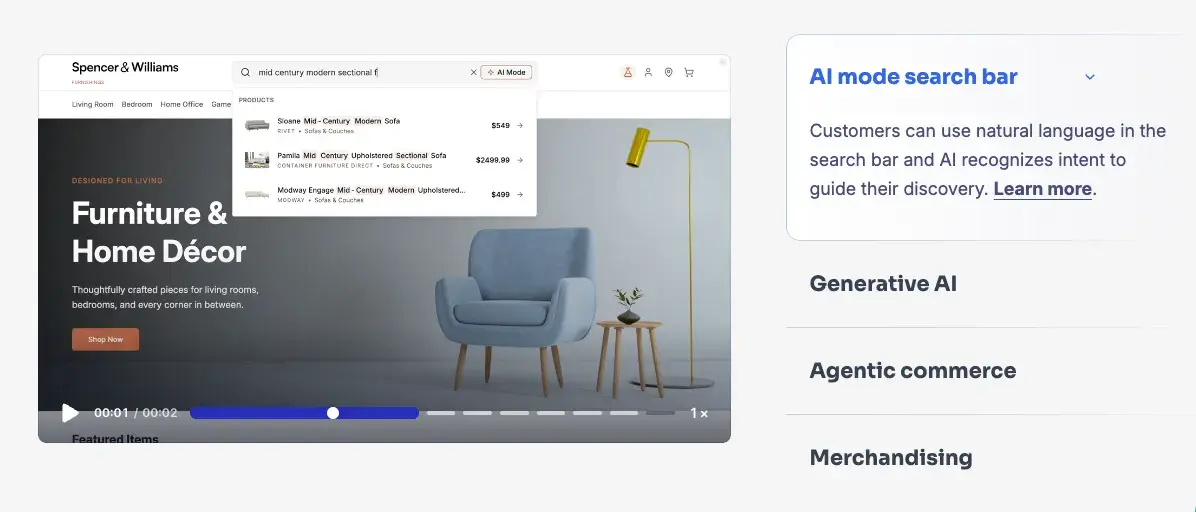
Algolia has also recently expanded into generative AI with its NeuralSearch and Ask AI features.
Coveo is stronger for enterprises with complex knowledge bases, Salesforce or SAP integrations, and personalized recommendations across customer-facing portals.
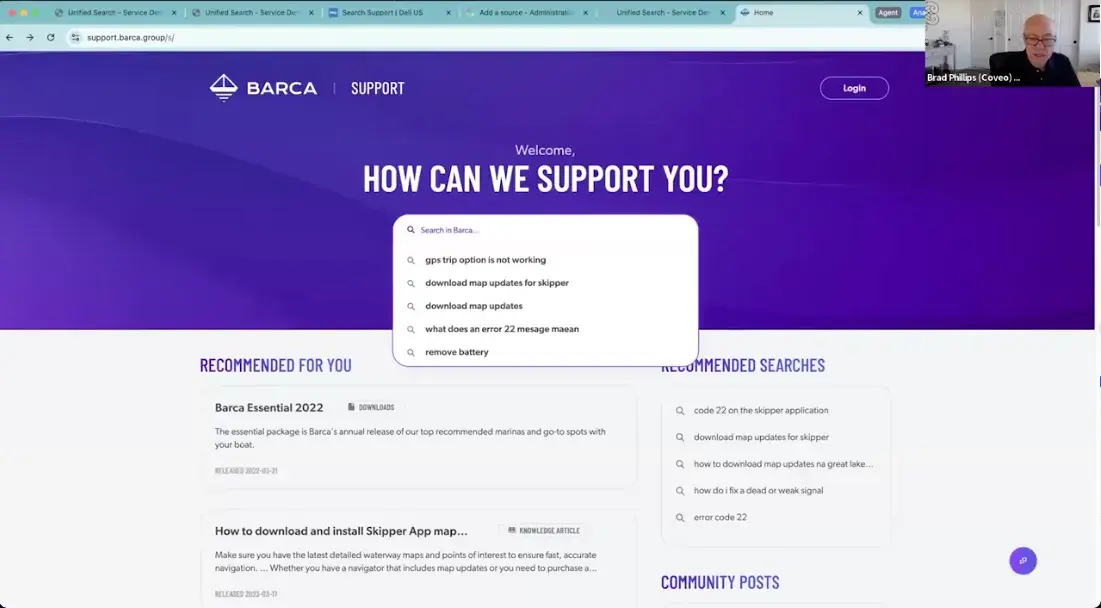
If your team is on Salesforce or SAP, Coveo’s native connectors remove a significant setup burden that other tools require custom engineering to solve.
Best for: E-commerce sites, SaaS documentation portals, large knowledge bases, and enterprise intranets that need smarter, AI-powered internal search.
Algolia pricing: Free to start, Contact for a quote
Coveo pricing: Contact for a quote
How Marketers Should Evaluate an AI Search Tool
The AI search tool landscape is noisy. New entrants are launching constantly, and feature checklists can look very similar on the surface.
Here’s what actually matters when you’re evaluating a tool:
- Citation transparency: Can you see what pages an answer engine is drawing from? For AEO tools, can you see which domains are being cited? Transparent citation data is critical to maintaining credibility and keeping your private information secure.
- Accuracy and error rate: It’s no secret that answer engines can get things wrong. In fact, Columbia University found AI answer engines produced incorrect citation information more than 60% of the time. Set your expectations accordingly, and always verify claims independently.
- Privacy and data handling: For enterprise use cases, understand what data the tool ingests, whether queries are used for model training, and how the vendor handles GDPR and data residency requirements. This matters especially for AI site search tools deployed with customer data.
- Reporting and measurement: For AEO tools specifically, look for platform-level breakdowns, rather than just aggregate scores. ChatGPT and Perplexity have meaningfully different citation patterns and audiences, so a single combined visibility number can hide an important strategic signal.
- Integrations and workflow fit: AEO tools that integrate with your existing tech stack are easier to act on. HubSpot AEO, for example, is built into Marketing Hub, which means visibility data, CRM context, and execution tools live in the same place.
- Recommendation quality: Tracking visibility is table stakes, but what does the tool tell you to do about it? Look for tools that provide insights and surface specific actions (i.e., content gaps, citation opportunities, prompt optimization), not just dashboards.
Frequently Asked Questions About AI Search Tools
Are AI search tools the same as chatbots?
Not exactly. While many AI search tools incorporate chat-based interfaces, not all chatbots are AI. The defining feature of an AI search tool is information retrieval.
AI search tools are designed to help you find, synthesize, or act on information, while chatbots are more focused on conversation, task completion, or customer service. ChatGPT, Gemini, and other similar tools sit at the intersection of both: they’re conversational AIs that also perform powerful research and search tasks.
What is the difference between AI search tools and AEO tools?
AI search tools are what individual users interact with directly to find information, such as ChatGPT, Perplexity, Google AI Overviews, Claude, and so on, for a variety of different purposes.
AEO tools are what marketers use to track and improve how their brand appears inside those AI search tools. They’re on opposite sides of the same equation: one is the channel, the other is the measurement and optimization layer for that channel.
How can marketers measure brand visibility in AI answers?
Traditional search analytics don’t capture AI search visibility.
You won’t find a “ChatGPT Search Console” or a Perplexity ranking report. AEO tools fill this gap by sending test prompts to answer engines, recording whether and how a brand appears, and tracking changes over time.
HubSpot AEO does this across ChatGPT, Perplexity, and Gemini, using CRM data to prioritize the prompts most likely to reflect real buyer behavior. HubSpot Marketing also includes “AI referrals” as a traffic source.
For a quick starting point, HubSpot’s free AI Search Grader delivers a one-time diagnostic snapshot with no setup required.
When does AI site search matter more than web search?
AI site search matters most when users are already on your website or inside your product and trying to find something specific. If your site has a large content library, complex documentation, or a product catalog, a smart internal search experience directly affects engagement, conversion, and support costs.
If users can’t find what they need on your site, they’re more likely to leave and ask an external answer engine, which may or may not send them back. Investing in AI site search (with tools like Algolia or Coveo) is about keeping qualified visitors in your ecosystem once they arrive.
AI search is moving fast. The good news is that the fundamentals of credible content, transparent sourcing, and strong brand authority still apply. The new requirement is measurement. Knowing where your brand stands in answer engines is the first step toward improving your visibility in these channels.
Search no more, marketers.
Answer engines have become the first stop for B2B buyers comparing vendors, consumers researching products, and just about everyone with a question they’d rather not dig through 10 links to find the answer. Most marketers know this, but fewer are actually doing anything about it yet. This is your advantage.
The tools in this article cover three specific functions: answer engines for day-to-day research, AI site search to keep your own visitors engaged, and AEO tools to measure and improve how your brand appears in answer engines. You don’t need all of them at once. Start with the tool that addresses your most immediate need.
If you’re a marketer and you’re not yet tracking your brand’s visibility in ChatGPT, Perplexity, or Gemini, that’s the gap worth closing first. Start with HubSpot’s free AI Search Grader to see where you stand, then use HubSpot AEO to track it over time.
The search for the right tools is over. Now is the time to act.